
HA HA D!CK
This is not how I thought I’d ever discuss my thesis research on my blog.
I always knew I wanted to do an entire blog post on my thesis—I did spend 6 years of my life on it, after all— but never in a million years would I have predicted my current writing circumstances. Normally I look for ways to incorporate science into fantasy and scifi settings, but in this case, the real-life science in question became more fantastical than what any author would come up with.
It all started with a combination of a video and my own obliviousness. See, I haven’t been paying attention to the winter Olympics. I’m balancing too many things right now (dog walks, tutoring, traveling to walks or tutoring session, trying to get my freelance work running, etc) to sit down and watch anything on the Olympics.
I stumbled across a small video of a professor addressing a class. I became excited, ready to type a comment explaining all of the ways you can use hyaluronic acid. It’s impressively long. And then the video pans over to a student sporting a ski suit? The surrounding students glance down at the student’s pants and then leave quickly.
I was lost as to what the punchline was. I scrolled through the comments, struggling to understand how an obvious dick joke connected to my favorite molecule. And then I saw a comment asking how big the student’s “bulge” must be. Another simply mentioned how wild the Olympics had been this year.
…What?!
And so, I searched “hyaluronic acid” and “Olympics.” Hoooooooooo boy, did I have some catching up to do!
The athletes have reportedly been injecting their penises with hyaluronic acid, which enhances their “size.” Not for enhancing their performance on the slopes, however. No, this is not your classic “doping” story, for this strategy is to change their measurements for their suits. Reportedly, having that tiny bit of extra “girth” gives the skier a major advantage while flying at top speeds.
They call it… “Penisgate.”
As of a few days ago, a plastic surgeon has confirmed that he injected hyaluronic acid into a ski jumper. Whether that jumper used their new size for measurements hasn’t been confirmed.
Now, I can’t speak on the physics of ski jumping, let alone how having a mini parachute at your crotch can help give you a wee bit more lift. Scientific American has an article covering that already. But I can speak on what the heck hyaluronic acid is.
Before I Begin, Want To Support Me?
Funnily enough, around the time I stumbled upon this Penisgate story, I also created a Patreon to help fund my science communication work. It’s essentially a monthly tip you can send my way!
I do have a public post on Patreon explaining why I’m starting a Patreon, which you can check out on the page (TLDR: I need some monetary help while I’m balancing side gigs and looking for real jobs). You can sign up for a number of tiers here if you’d like to help out a science communicator!
Okay, this is the first and last time I’m putting an ad at the beginning of my blog post!
Hyaluronic Acid, Hyaluronan, and HA
Hyaluronic acid, or HA, is not the acid you think it is.
Not that calling it an “acid” is a misnomer or inaccurate, but unless you’re a biochemist, it’s a bit misleading:
The PH, which is how we measure the acidity of a substance, is around 4-5 for HA. When a chemical has a PH lower than 7 (which is the level water is at), we call it an acid. The sloer that PH number is to 0, the more acidic a substance is. Now, 4-5 for PH isn’t something to laugh at.
For reference, however, the PH of 100% HCl (hydrochloric acid) is 0.1. So while HA is certainly more acidic than water, it’s nowhere near the same level as the real nasty acids.
It’s why I prefer to introduce HA as “hyaluronan,” or just HA. 1) I’m very proud that I can pronounce the word now and 2) it strategically saves me from using the word “acid.” HA is what we call a polysaccharide, which just means “very very long sugar.” And when I say long, I mean long. HA is produced everywhere in your body and stretches out over the outside of cells like a protective shield of thread. If you come to one of my talks, I also describe HA covering the cell’s exterior like “a freshly mowed lawn.”
If we look at the structure of HA, we’ll see two repeating sugars linked together repeatedly. It’s the sweetest conga line ever (pun intended).

The fact that HA is made up of so many sugars is the reason why it’s at the center of Penisgate.
HA, Cosmetics, and Beyond
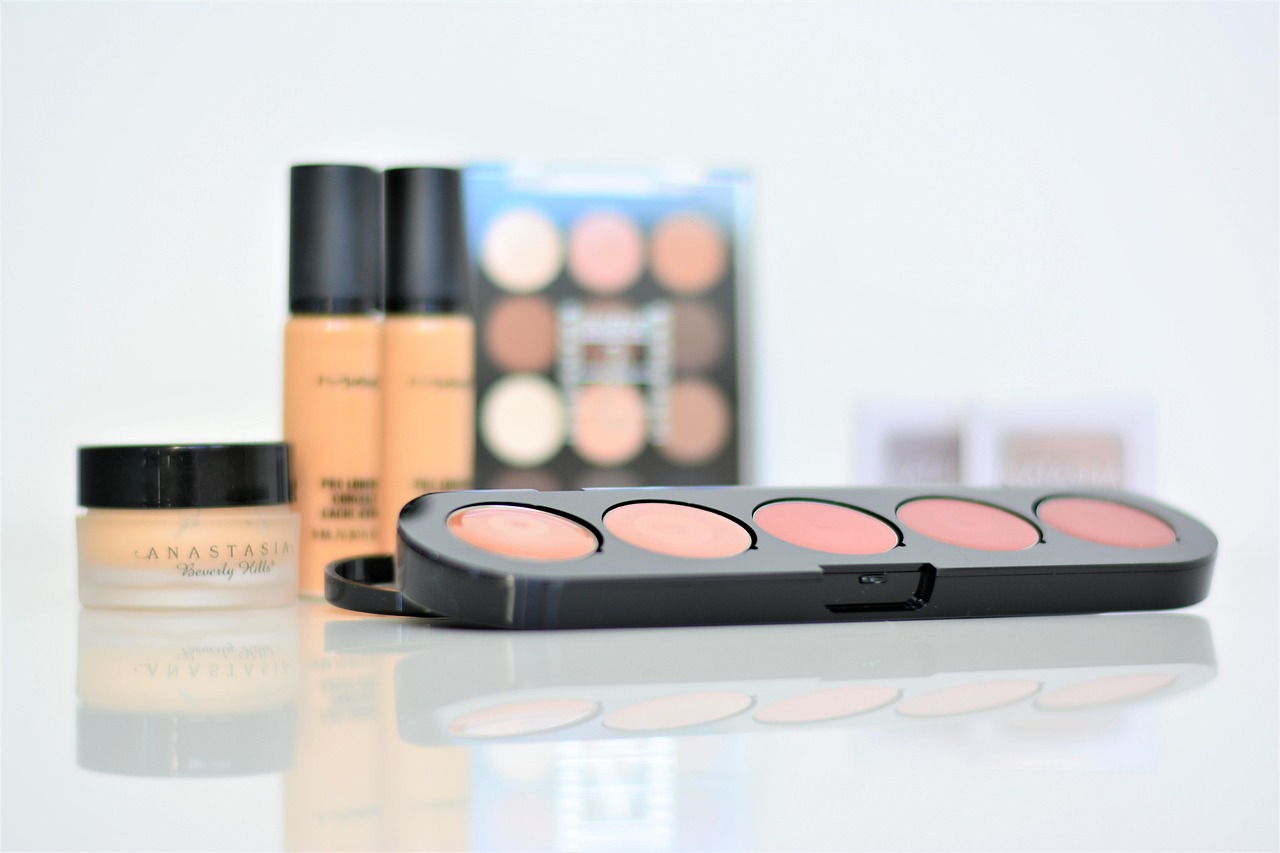
You may have heard about HA in commercials; check the back of most cosmetics, and it’s listed as an ingredient. This is because HA is hydrophilic, or “water loving.” It sucks up and holds onto water like a sponge. It keeps your skin hydrated, or, in the case of Penisgate, your parts very “swoll” (that’s what the cool kids call it nowadays, right?). It’s a common filler that gives your skin that extra lift.
Now, I want you to imagine that you’re a scientist who studies HA for 6 or so years. You search for “hyaluronan” or “hyaluronic acid” on your computer on a daily basis. I want you to imagine the onslaught of cosmetic commercials every time you go on the internet. I want you to imagine that these commercials play on whatever app you’re listening to while you pipette blood, meaning that you can’t change the channel or fast forward and so are beholden to whatever wild nonsense is coming out of your earbuds.
I want you to finally imagine how many times a creepy sexy voice has whispered “hyaluronic acid” in your ear from these commercials.
As a HA scientist, I don’t know why you’re trying to make “hyaluronic acid” sound sexy. It’s not. Like, I understand that you’re trying to sell a product, but to choose that word as the one with the sexy emphasis? I question so many cosmetic company’s marketing campaigns.
So What’s Happening with the Penises?
(Not a section title I ever thought I’d use, yet here we find ourselves)
Let’s get the obvious parts out of the way: no, HA is not causing erections. While HA can cause angiogenesis, which is the formation of new blood vessels, there’s nothing happening with blood vessels in these injections. The effect is immediate after injection.
It’s simpler than an erection.
You’re pumping what is a biological sponge into your region to hold onto water. Like a sponge, it “inflates” when given water. Therefore, the “bulge” comes from increased hydration in the nether region. Like I said above, it’s a filler.
Now to Talk About the Fun Facts!
But did you know HA is fantastic for wound healing? It’s true! Doctors also use it for joint injections in place of invasive joint surgery (source: my physician parents). It also helps regulate your immune system! When hyaluronan is long, it helps keep the immune system turned off. This is called “anti-inflammatory” effects.
For my research, I looked at how HA keeps your blood from clotting during Inflammatory Bowel Disease (to be specific, I looked at how a receptor that recognizes HA signals in your clotting cells). It turns out that HA binds to a specific receptor in platelets (the cells that make your blood clot) that shuts down the process to form clots.
However, when HA is fragmented during disease, those pieces of HA can activate the immune system, also called “pro-inflammatory.” Some of these pieces can go on to activate other cells in your immune system, like T-cells, while others can make your blood vessel walls “leaky.”
I haven’t even gotten to the fun part yet! During disease, HA can branch out into the bloodstream, acting as landing pads for immune cells. This helps the immune cells reach the sites of injury or disease in the blood. My previous lab researched the growth and reduction of those HA branches (in the context of chronic diseases).
Takeaways?
Apparently, I missed out on a very lucrative business with my research.
In all seriousness, it’s interesting to find my field of study out in the wild in this way. I thought the next time HA made the headlines, it would be because of a new surgery technique or some new healing cream. The possibilities of HA in medicine are endless, so surely a groundbreaking medication would incorporate HA and become front page news, right? Nope! Thank you, Penisgate! I got to discuss my ol’ thesis work while making vague (and not so vague) innuendos!
Anyway, thank you all again, and I’ll see you next time!
(Please remember to check out my Patreon if you like what I do on the blog and want to support me!)