Amaze Amaze- We Need to Talk About Project Hail Mary
I’m not much of a movie person.
If you know me, you know that getting me to watch a movie is like herding hedgehogs on amphetamines. It’s not because I don’t enjoy movies, but because I: 1) Haven’t had a TV in over a decade, and… 2) Never had the time to go to the movie theaters during my PhD (which accounts for 6 years).
But then this new scifi movie started showing up everywhere. Initially, I was barely intrigued. I’d read the Martian, loved the movie, but had heard that his following book was not nearly as good (turns out I was confusing Project Hail Mary with another of his books). I thus hadn’t bothered to read the book and knew nothing beyond the trailers. Secondly, the initial advertisements pitched it like any other space scifi movie with a touch of climate change. The world is dying, guy goes to space, must deal with being alone in space, etc. Very bleak, and very repetitive. In our current state of STEM in the US, which crumbles around us daily thanks to the federal government illegally withholding grant money, coupled by the world’s worsening climate change, I had no desire to see another “world ending” scifi film. I needed a
…And after a month of advertisements, they finally mentioned that Project Hail Mary was a “first contact” film with a rock alien who’s a lil’ space engineer. Why didn’t they lead with that?! I was sold.
Sitting back in my theater seat, I prepared myself for a space buddy-buddy film that survived the void of space. To my great surprise, I was gifted a heartwarming story that encapsulated the wonder of space, science, and the unknown with two scientists at the center who just wanted to do good. This was the best film I’d seen in a long time. I can’t think of another film that’s given me so much joy and hope.
So allow me a bit of self-indulgence as I gush about this beautiful movie!
Bringing Back Wonder
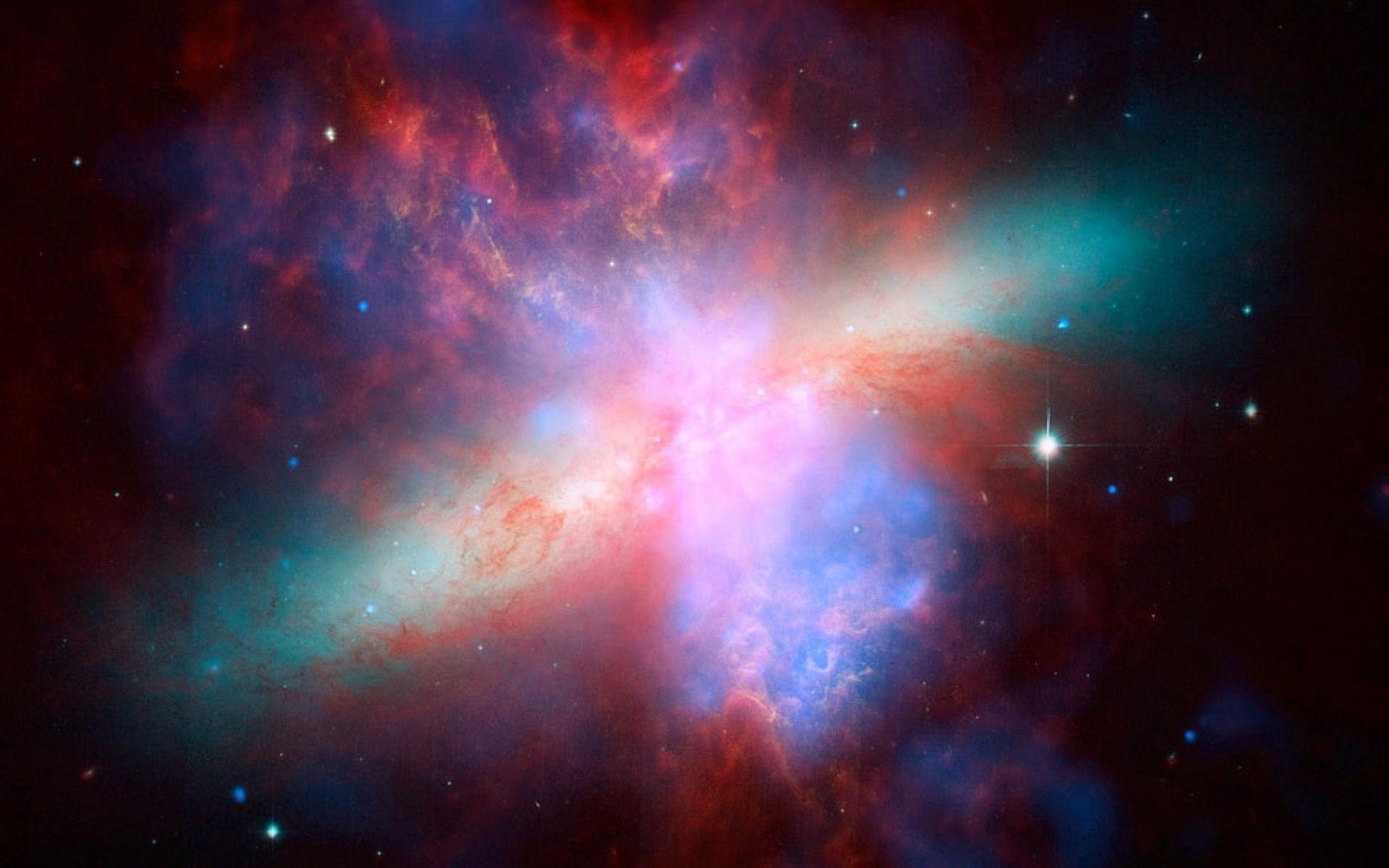
I must talk about the use of color in this film. Almost every space scene in this movie uses a warm color palette. Grace’s space suit is red. The astrophage becomes red during the “having a moment” sequence. Rocky is a burnt orange. Everything is so welcoming.
(If you want to hear a more in-depth convo on the colors, I stumbled upon this video that dives into the color grade of the movie)
And the sound design? Immaculate! Perfection! They use percussion instruments for most of their main space melodies, which are used in such upbeat rhythms that you can’t help but boogie to them (I’ve been listening to “Amaze Amaze Amaze” from the soundtrack for days now). The musicians still keep the string instruments that are indicative of the vastness of space (listen to any scifi film and you’ll become bombarded with the timbre of string instruments,) but PHM uses them as the base notes. For the first time, I get to hear the vastness of space supporting space joy.
(For those of you not in the know, I was a competitive composure back in my youth. I wrote many piano pieces and studied music theory like it was going out of style. I still do, though I don’t currently have the time to compose. But tldr, I’m a music junkie.)
Science is warm. Science is uplifting. Science is joy.
SciComm Basics on Display
I’ve seen The Martian, another of Andy Weir’s works, so I knew we were going to get a lot of science. However, this movie’s science communication was leaps and bounds better than what was displayed in The Martian.
Having Grace be a middle school teacher was genius. Let’s consider his first flashback with the kids, where Grace is explaining the Petrova line. We can note that he doesn’t talk down to his students despite them being significantly younger. He also gets out tape to do a physical representation of the Petrova line. He shows pictures. He uses simple analogies.
Yes, this is obviously exposition for the audience, but everything he’s doing is spot on for IRL science communication. I even adore how he interacts with other scientists, where he has this long winded explanation of how the astrophage moves through space, and then he simplifies what he just said with:
“They toot to scoot.”
It’s funny, it’s accurate, and it gets the point across. I’ll withhold my passionate monologue on using humor in scicomm… for now.
But my favorite display of science communication was between Rocky and Grace, where they were arguing and debating. We, the audience, learn something valuable by having two scientists throw ideas back and forth in a way both can understand. Using the puppet shows, the miming, and the earth videos to get ideas across when words aren’t enough is just brilliant communication. Most modern scientists have forgotten this skillset (and I say this lovingly), not just with a laymen audience, but between other scientists too.
Sometimes, you need to “do puppet show. Show time.”
Scientists Being the Good Guys
Before writing this post, I’ve peaked back at my post, My Problem with Essek, and I can feel the despair in my writing, the fatigue of seeing yet another bad guy scientist. And I did briefly brace myself for this age-old trope to pop up at some point in the story in some way. However…
There is no “evil scientist” trope in the movie. Every scientist shown was driven to do good and save their respective worlds.
“But wasn’t Stratt—?”
Stratt was not a scientist! I had to double check, but she’s just the director of the Hail Mary project. Also, she’s more of a true literary anti-hero rather than an evil character, but I digress.
The story has the world come together to fix a world-ending problem. They put the best scientific minds together from every corner of the world to rig together a plan. It’s very heartwarming to see such collaboration for science; it speaks to my inner belief that most of us fundamentally are kind. Is it a realistic belief? Perhaps not, but it feels good to see scientists embody those morals on the silver screen.
Grace and Rocky are both lovable dorks, both equally humanized in a way I’ve never seen scientists portrayed in this type of fiction. Grace wears his glasses all funky. He dons the oddest shirts. Rocky has a romantic partner back home. He chitters and does jazz hands when he’s excited. They both do adorable puppet shows to get their points across (which real world scientists do. That was one of the funniest parts of the movie because I’ve been there during my PhD multiple times!)
Which leads me into the most critical depiction of scientists that I haven’t seen in so, so long…
Scientists as Heroes
This goes beyond “being a good person.”
Heroes sacrifice. Heroes hold onto their ideals despite the realities of the world. Heroes cultivate hope.
I will add a touch of nuance here: I’m talking about western heroes as depicted in relatively recent history. Ancient heroes, like Odysseus or Gilgamesh, embody very different morals depending on the cultures they originated from. But as I’m an American living in 2026, the western hero archetype resonates with me and is my general definition of heroism.
Our cultural heroes inspire us.
“But didn’t Grace—?”
Yes, he did refuse to go to space. But that’s why it was the twist! You’ve seen him overcome his fears and act so bravely in so many situations, saving Rocky, going out into space with zero memories, that it comes as a shock that Grace would never willingly sacrifice himself for the greater good.
But the reason why the twist works is because immediately after we figure this out, Grace must heroically choose between earth and Rocky… and he chooses heroism. He chooses to save both Erid and Earth rather than just Earth.
For Grace, we know that that’s a major sacrifice, if not the ultimate sacrifice as he wouldn’t have made the same choice previously.
Takeaways
I think this movie needs to be shown to all scientists for so many reasons. The story demonstrates how to speak science to a wide variety of audiences that is not only understandable, but enjoyable. The story demonstrates a . The story demonstrates heroes who happen to be scientists (or perhaps it’s the other way around?).
And most importantly, the story demonstrates how to introduce the wonder of the scientific unknown with… Well, grace! People are trained to turn away from the undiscovered, which is a major reason (in my opinion) why we have a massive wave of distrust of science right now. But to have a successful blockbuster champion facing and embracing that scientific uncertainty is a major step forward to changing public perspective.
This story could be a major boost in how scientists are viewed culturally. Of course, we scientists need to capitalize on that, but I think it’s hard not to be optimistic after watching this movie!
I hope to see more movies like this in the coming years. I left the theater with the biggest smile on my face.
Amaze. Amaze. Amaze.
If you’d like to support me and help me put out more cool blog posts like this, please remember to check out my Patreon.
Wait, No Centrifuge Bit? No Rant On That Balancing?
That part of the movie needs to go into a blog post discussing scientific accuracy in stories. For now, lemme pretend like the movie had no flaws! :)